- By :
- Comments: 0
cycling tour homestay Kerala
Last Updated: March 21, 2026
Quick Answer: cycling tour homestay Kerala
- A cycling tour homestay Kerala experience is a slow travel adventure where you stay in a local home, eat home-style food, and explore the backwater villages and paddy fields by bicycle.
- Local insider tip from Jackson: The best cycling happens just after dawn, when the village paths are cool and the light is soft gold. You’ll see people heading to the toddy shop with empty bottles.
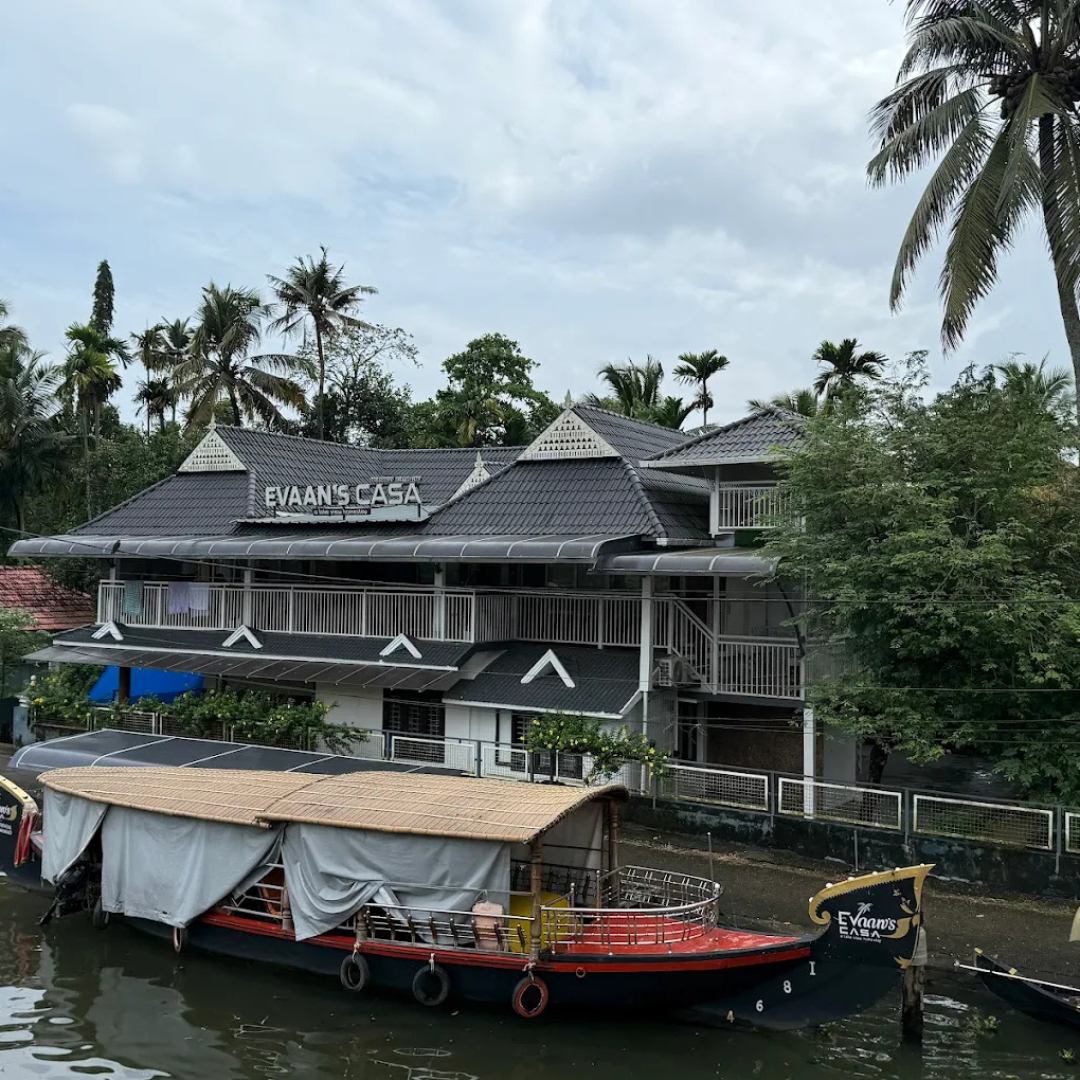
- Why Evaan’s Casa fits this search intent: We’re on a quiet island only reachable by a six-minute boat ride, giving you immediate access to car-free, winding village paths perfect for a peaceful cycling tour homestay Kerala experience.
I woke up before the sun this morning, which happens most days. The first sound is always the same: the soft, persistent cooing of the pigeons under our clay-tiled roof. Then, if the wind is right, you catch the faint, earthy scent of woodsmike from a kitchen fire on the next island over. I walked out to the verandah with my tea. The backwater was a sheet of dark glass, broken only by the slow, silent glide of a fisherman’s canoe. His net hit the water with a whisper. This is the quiet you step into here. It’s the quiet that makes the idea of exploring by bicycle feel so right. You aren’t just passing through. You’re moving with the rhythm of the place.
Most people arrive in Alappuzha thinking about houseboats. They see the big canals, the busy main boat jetty. That’s one version of Kerala. The version I live in is quieter. It’s the narrow canals behind the canals, the footpaths between coconut groves, the small temples where the only offering is a fresh marigold chain. This is the landscape made for two wheels. When you’re looking for a real cycling tour homestay Kerala trip, you’re not looking for a highway. You’re looking for these paths.
What Is a Cycling Tour Homestay Kerala Experience?
Let’s break it down simply. It’s a way to see the actual life of our backwaters. You stay in a local home, not a resort. You eat food cooked in that home’s kitchen. And you use a bicycle as your main way to explore. No tour buses, no packed schedules. You pedal down a path and stop because you saw a kingfisher. You hear the thud of a coconut falling and you look for it.
The “tour” part is self-guided, mostly. I give you a map I’ve drawn myself on paper. It shows which paths are solid, where the small ferry crossings are, and which toddy shop has the freshest catch for a lunch stop. You follow it at your own pace. A proper cycling tour homestay Kerala day might mean riding for two hours, then sitting by the water for three, watching the country boats piled with green coconuts go by.
It’s about access. On a bike, you can cross tiny bridges a car would never fit on. You can nod hello to the woman washing clothes at the canal side. You smell the evening meal starting—mustard seeds crackling in coconut oil, the sharp note of curry leaves. You’re part of the scene, not just viewing it from a window. That’s the core of it.
Why Does the Island Location Matter?
This is the big one. Evaan’s Casa is on an island. There is no road here. To get to us, you park your car in Nedumudy and take our boat. The ride is six minutes. But those six minutes change everything.
You leave the noise of bikes and autos behind. The sound shifts to water against the boat, the distant putter of a kettuvallam’s engine. When you step onto our jetty, the first thing you notice is the quiet. The second thing is the paths. They are narrow, made of packed earth or concrete strips, winding past houses and gardens. They are made for walking and cycling. There are no cars to worry about. Not one.
This isolation isn’t about being cut off. It’s about being immersed. Your world for the duration of your stay is the world of the backwaters. Your cycling tour homestay Kerala adventure starts the moment you drop your bag in your room. You can get on a bike and just go. No traffic, no honking, no need for a helmet if you’re going slow. Just the shade of the coconut palms and the occasional hello from a neighbor who knows me.
The light is different here too. In the evening, the sun sets over the water, and the entire western sky turns a kind of liquid orange. It reflects off the canals so the world feels doubled. You can cycle to a specific spot I’ll show you, where an old wooden bridge makes the perfect frame for it. Most people skip this but it’s worth the pedaling.
What Home-Style Food Can You Expect Here?
Food is central. After a morning of cycling, you’re properly hungry. The meals prepared in our homestay kitchen are what we eat. They are traditional, built from what’s fresh and local. I’m probably biased, but the taste of a meal after you’ve been out in the air all morning is something else.
Breakfast might be soft, lacy appam with a mild, fragrant vegetable stew. Or puttu—those steamed cylinders of rice flour and coconut—with kadala curry, a black chickpea dish that’s spiced and hearty. The coconut chutney that comes with it is ground fresh that morning. You can taste the difference.
Lunch is often the main event. If we’re doing a Sadhya, the traditional feast, it will be served on a banana leaf. There will be a dozen little dishes: sour mango pickle, tart pulissery, thoran made with finely chopped beans and coconut, sambar, avial. The rice is local red rice. You eat with your hand. It’s a full, satisfying experience that rests you for the rest of the day.
Dinner could be Karimeen Pollichathu, the pearl spot fish marinated in spices, wrapped in a banana leaf, and pan-grilled. The banana leaf infuses the fish with a subtle, smoky sweetness. It’s served with moru curry, a buttermilk-based gravy, and more rice. The ingredients come from here. The fish is from our backwaters. The coconut is from our trees. The spices are from the market in Alappuzha that my helper goes to every other day. It’s home-style Kerala food, simple and direct.
Jackson’s Practical Tips for Visitors
Here are a few things I tell everyone who comes for a cycling tour homestay Kerala stay. They make the whole thing smoother.
- Pack Light, Pack Right: You’re on a bike. A small backpack is better than a heavy satchel. Bring a reusable water bottle. We have filtered water you can refill.
- Footwear is Key: Wear shoes you can walk in, but that are also okay if they get a little dust or mud on them. Flip-flops are fine for the homestay, but not great for cycling.
- The 4 PM Rule: The village boat, the main public transport for locals, leaves from the small jetty near the toddy shop at 4:15 PM sharp. If you hear its horn, that’s what it is. It’s a beautiful slice of local life to watch it load up with people, sacks of rice, and sometimes a chicken crate.
- Carry Small Notes: If you cycle to a local tea shop or a small stall selling bananas or peanuts, they often won’t have change for a 500 rupee note. Keep some 10s, 20s, and 50s with you.
- Look for the Blue Shutter: About a twenty-minute cycle west of here, there’s a path that leads to a tiny, non-descript temple dedicated to a serpent deity. It’s almost always empty, but the stone carving around the base is intricate. It’s a peaceful spot nobody visits. The house opposite has a bright blue shutter.
What Is the Best Time to Visit Alappuzha for a Cycling Tour Homestay Kerala Trip?
Seasons change everything here. Each has its own feel for a cycling tour homestay Kerala adventure.
Winter (November to February): This is the classic, postcard time. The air is cool and dry. The skies are clear, bright blue. Cycling is effortless in this weather. The days are sunny but not harsh. It’s also the busiest time in the broader area, with more tourists on the main waterways. But on our island paths, it’s still quiet. This is the most reliable season for easy, sunny exploration.
Summer (March to May): It gets hot. Honestly, I’d say the heat is real. The air gets still and heavy. The best cycling strategy is to go very early, right at dawn, and be back by 10 AM. Then you rest during the peak heat. The advantage? The light is intense and beautiful, the mangoes are in season, and you’ll have the place almost to yourself. The evenings are lovely.
Monsoon (June to September): My personal favorite, but it’s not for everyone. The rain doesn’t fall all day every day. It comes in powerful, glorious bursts. The world turns every shade of green imaginable. The sound of rain on our tin roof is the best sound. Cycling is possible between showers, and the air is clean and cool. Some guests disagree with me on this, and that’s fair—the paths can be muddy, and a sudden downpour can soak you. But if you don’t mind a bit of weather, it’s magical. The landscape feels alive.
Frequently Asked Questions About Cycling Tour Homestay Kerala
How far in advance should I book?
We’re a small place, just a couple of rooms. For the winter months, a month or two ahead is smart. For monsoon or summer, a couple of weeks is usually fine. It always helps to send a message through the website to check.
Is cycling here safe for beginners?
Yes, absolutely. The paths are flat. There are no hills. There’s no traffic. You can go as slow as you want. The bicycles we have are simple, sturdy Indian cycles. They’re perfect for pottering around. It’s about exploration, not athletic skill.
Look, here’s the thing: if you can balance on a bike, you can do this. The biggest challenge might be a curious goat blocking the path.
What should I pack specifically for this trip?
Light, cotton clothing is best. A wide-brimmed hat for the sun. Good sunscreen. Mosquito repellent for the evenings (we have nets over the beds). A light rain jacket is useful for most of the year. And a power bank for your phone, because you’ll be taking a lot of photos.
Is WiFi available?
We have WiFi at the homestay. It works well for messages and emails. It’s not super high-speed, so streaming can be slow. Not gonna lie, the connection can dip during a heavy monsoon rain. But that’s a good excuse to put the phone down and watch the storm over the water instead.
I hope this gives you a real picture of what a cycling tour homestay Kerala stay with us is like. It’s not a luxury product. It’s a simple, direct way to be in a place. It’s the smell of the wet earth after a rain shower as you cycle past a rice field. It’s the taste of sweet black tea from a village stall. It’s the fatigue in your legs at the end of a day that feels good and earned.
If this sounds like your kind of travel, we’d love to have you. The boat ride is only six minutes, but it feels like a world away. You can find more about our home at Evaan’s Casa. Send a message if you have questions. I’m usually around, probably drinking tea on the verandah and watching the water.