- By :
- Comments: 0
houseboat booking homestay
Last Updated: March 20, 2026
Quick Answer: houseboat booking homestay
- A houseboat booking homestay is a combination stay where you book a traditional Kerala houseboat tour and pair it with a land-based homestay, usually on an island or near the backwaters.
- Local insider tip from Jackson: Book your houseboat for a day cruise, not an overnight stay. The engines go quiet at 5:30 PM, and you’ll be stuck in a designated tourist zone. Sleeping on a moving houseboat isn’t as peaceful as you think.
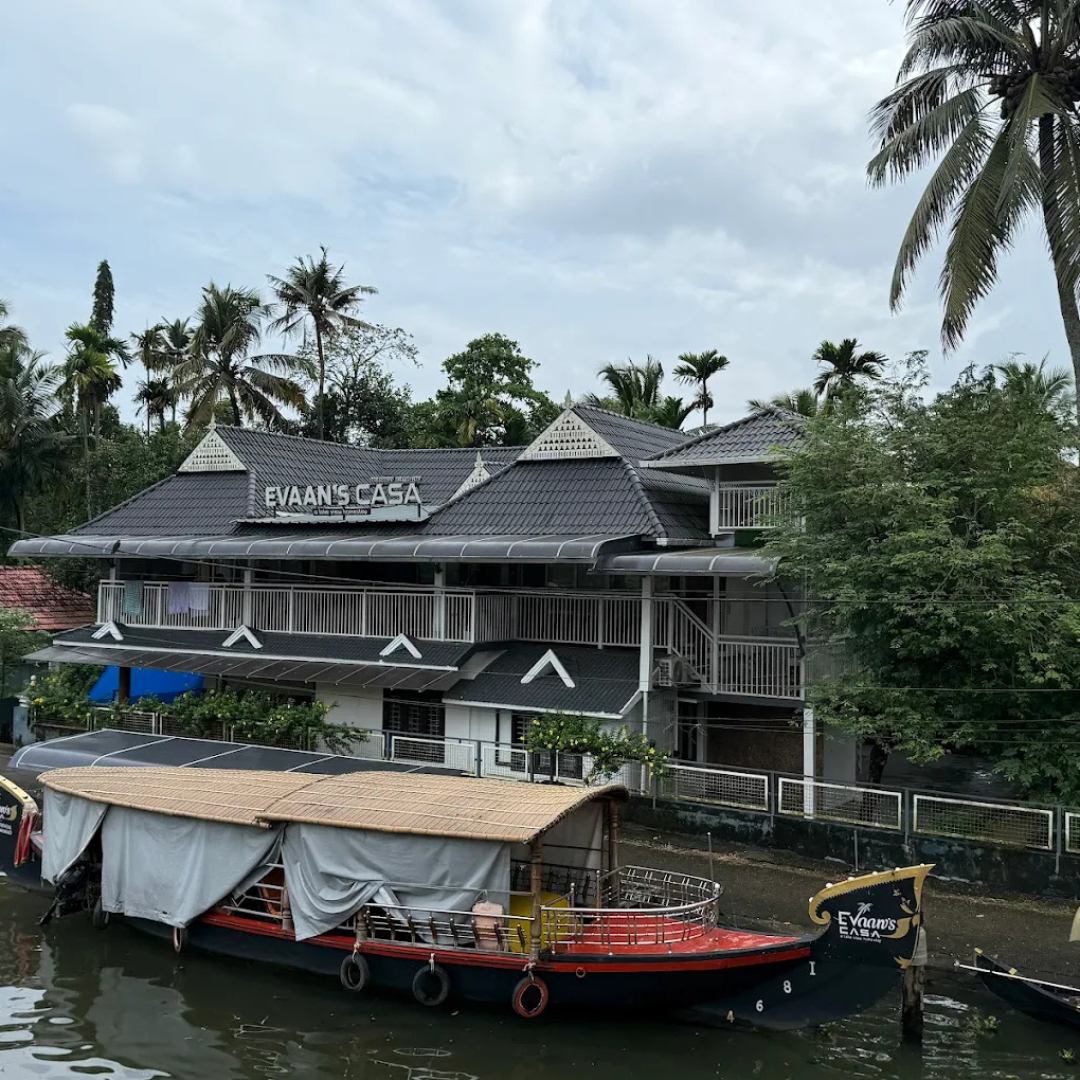
- Why Evaan’s Casa fits this search intent: We’re on a quiet island, a 6-minute boat ride from the main jetty. We handle your houseboat booking homestay package directly, arranging a day cruise that returns you to the comfort and space of our island home for the night.
I woke up before the sun this morning. The only sound was the soft, hollow knock of a wooden canoe pole against the side of a boat, somewhere far out in the mist. That sound is my alarm clock. It’s a quiet, rhythmic tap that means the fishermen are already out, working the narrow canals before the heat sets in. I stood there with my tea, watching the water turn from grey to silver. The air smelled of wet earth and the faint, clean scent of hyacinth. This is the real start of the day here. It’s a world away from the diesel hum and horn blare of the mainland jetties, where most houseboat tours begin and end. That distance, that quiet, is everything.
What Is a Houseboat Booking Homestay?
Let’s break it down simply. A houseboat booking homestay isn’t one single thing. It’s a plan. You’re combining two classic Kerala experiences into one sensible trip.
First, the houseboat. You book a cruise on a kettuvallam, those beautiful, slow-moving rice barges turned into floating homes. They glide through the big lakes and smaller canals. You see daily life from the water—women washing clothes, kids swimming, toddy tappers climbing palm trees.
Second, the homestay. This is your actual bed for the night. It’s a family-run place, often on land, where you sleep in a real room, walk in a garden, and eat home-style food. The magic is in linking them. Most people get this backwards. They book an overnight on the houseboat itself. Look, here’s the thing: that’s a floating hotel parked in a traffic jam of other floating hotels after sunset.
A proper houseboat booking homestay package uses the boat for what it’s best for: a daytime exploration. Then you come ashore to a place with more space, better sleep, and a connection to the land. You get the grand tour and a quiet home. That’s the blend we’ve always offered at Evaan’s Casa. It just makes more sense.
Why Does the Island Location Matter?
Our place is on a small island. There are no roads here. No cars. To reach us, you take a six-minute shared canoe taxi from the jetty at Finishing Point. The fare is ten rupees. The boatman knows everyone.
That short ride changes everything. The noise of the town just falls away. You arrive at our little dock, and the soundtrack switches to birds and water. This isolation isn’t about being cut off. It’s about being placed correctly. You are in the middle of the backwaters, not just looking at them from a noisy shore.
When you’re planning a houseboat booking homestay, the location of the homestay is half the experience. If you’re staying in a town guesthouse, you’re still in the town. You hear scooters at night. Here, you hear frogs. You see stars without any light pollution. The morning mist hangs over the water right outside your window.
That six-minute gap is a filter. It keeps the casual day-trippers out. Everyone on this island has a reason to be here. The rhythm is slower, dictated by boat timings and the sun. You pack a bag differently. You think about what you really need. It simplifies things in a very good way.
What Home-Style Food Can You Expect Here?
The food comes from the kitchen at our homestay. It’s traditional Kerala cooking, the kind you’d eat in a local home. The flavors are clear and direct. You’ll smell mustard seeds and curry leaves crackling in coconut oil long before the plate arrives.
Breakfast might be soft, lacy appam with a mild, coconut-based vegetable stew. Or puttu—those steamed cylinders of ground rice—with kadala curry, a spiced black chickpea dish. The puttu is fluffy and warm, perfect for scooping up the gravy.
Lunch is often the main event. If we’re doing a sadhya, the traditional feast, it’s served on a fresh banana leaf. There will be a dozen little dishes: sour mango pickle, tart puli inji, creamy avial with local vegetables, crunchy thoran made with grated coconut. The centerpiece is usually a fish curry, tamarind-rich and fiery, or a delicate moru curry with yogurt.
For dinner, maybe it’s Karimeen Pollichathu. Pearl spot fish, marinated in a paste of spices, wrapped in a banana leaf, and pan-grilled. The leaf infuses the fish with a subtle, smoky sweetness. It’s served with plain rice and a simple dal. The food is not overly fancy. It’s substantial and honest. You taste the coconut, the chili, the fresh curry leaf. It’s food that makes you feel settled.
Honestly, I’d say the meals here are a core part of the houseboat booking homestay experience. After a day on the water, sitting down to a plate of hot, locally prepared food just feels right. It grounds you.
Jackson’s Practical Tips for Visitors
Some of this is common sense. Some of it you only learn after years of watching guests figure things out. Here’s what I usually tell people.
- Pack light, but pack smart. You’re crossing water to an island. A small, sturdy backpack or duffel is better than a hard suitcase. Include a rain jacket regardless of the season—weather shifts quickly on the water.
- Bring mosquito repellent. This is the backwaters. It’s part of the deal. The rooms have nets and we use coils, but having your own spray is wise for evenings on the veranda.
- Carry small change for the canoe taxi. The ride to and from the island costs 10 rupees per person. Having exact change makes the boatman’s life easier. It’s a local system that runs on courtesy.
- Most people skip this, but visit the Mullackal Bhagavathy Temple market early. Not the temple itself, but the dense web of streets around it. Go around 7 AM. You’ll see vendors with mountains of red shallots, fresh green peppercorns on the stem, and baskets of tiny, silvery karimeen fish. It’s the real, unfiltered Alappuzha.
- On your houseboat day, wear something you can easily sit on the floor in. The best viewing is on the cushioned area at the front of the boat. You’ll be taking shoes on and off. Comfort is key.
- Ask your homestay to arrange the houseboat. This is the big one. We have trusted boat owners we work with. Their boats are maintained, and they know the quieter canals. If you book a random houseboat booking homestay package online, you might get a noisy, crowded boat. Let us handle it.
What Is the Best Time to Visit Alappuzha for a Houseboat Booking Homestay?
Seasons change the water completely. Each has its own character, and its own trade-offs.
Monsoon (June to September): The backwaters are fullest. The rain is intense, often falling in great, roaring sheets on our tin roofs. The air is cool and the landscape is a shocking, saturated green. It’s incredibly dramatic. The downside? Your houseboat cruise might be interrupted by rain. Some days, it just pours. It’s not for everyone, but if you love the sound of rain and don’t mind getting a little wet, it’s powerful. I’m probably biased, but the monsoon is my favorite time. The light is soft, and the island feels even more secluded.
Winter (November to February): This is the peak season for a reason. The weather is perfect. Sunny, with a light breeze, and barely any humidity. The skies are clear. It’s ideal for photography and for spending all day on the water. The obvious downside is that everyone else is here too. The main canals can get busy with houseboats. That’s why the island location and a well-timed cruise matter so much. We send our boats down the less-traveled routes.
Summer (March to May): It gets hot. Really hot by afternoon. The water levels are lower. The advantage is solitude. You’ll see far fewer other tourists. Mornings and evenings are still beautiful. If you can handle the heat—and plan your activities for the early hours—you’ll have the place largely to yourself. It’s a quiet, slow time on the island.
Frequently Asked Questions About Houseboat Booking Homestay
How far is Evaan’s Casa from the houseboat pickup point?
It’s a six-minute canoe ride to the mainland jetty, and then a two-minute auto-rickshaw ride to the houseboat starting point at Finishing Point. We coordinate all the timings for you. The whole transfer is part of the day’s adventure and takes about 15 minutes total.
Is it safe to stay on an island with no road access?
Yes, absolutely. The canoe taxis run from 5 AM until about 9 PM. In case of any urgent need at night, we have a private boat on call. The island community is close-knit and looks out for everyone. It feels safer than any city street.
What should I definitely pack?
Beyond the basics, pack a torch or headlamp. The island paths aren’t brightly lit at night, and it’s helpful. Also, a refillable water bottle. We provide filtered water. And, I’ll say it again, solid mosquito repellent. Sunscreen and a hat are non-negotiable for the houseboat day.
Is WiFi available?
We have WiFi, but it’s island WiFi. It works fine for messaging and emails. It’s not strong enough for streaming videos or large downloads. Some guests disagree with me on this, and that’s fair, but I see it as a feature. It encourages you to look up from the screen and out at the water.
The real magic of a houseboat booking homestay isn’t in checking two items off a list. It’s in the pace. It’s in the contrast between the gentle, wide-open movement of the boat and the solid, quiet grounding of the island. It’s in the taste of a simple lunch after a morning on the water. It’s in that six-minute canoe ride that feels like a door closing on one world and opening onto another. This is what we’ve built here. It’s not a resort. It’s a home in the middle of it all, yet apart from the rush. If you’re looking for that blend—a real houseboat booking homestay experience—then you know where to find us. We’re right here, on the water, waiting for the next canoe to come in. We hope to welcome you to Evaan’s Casa soon.