- By :
- Comments: 0
home cooked food Kerala
Last Updated: March 19, 2026
Quick Answer: home cooked food Kerala
- It’s a full experience of traditional Keralan meals, prepared with local ingredients and served with a deep sense of place, often on a banana leaf.
- Local insider tip from Jackson: The best flavors come from what’s just been pulled from the water or picked that morning. Always ask for the day’s catch or seasonal vegetable.
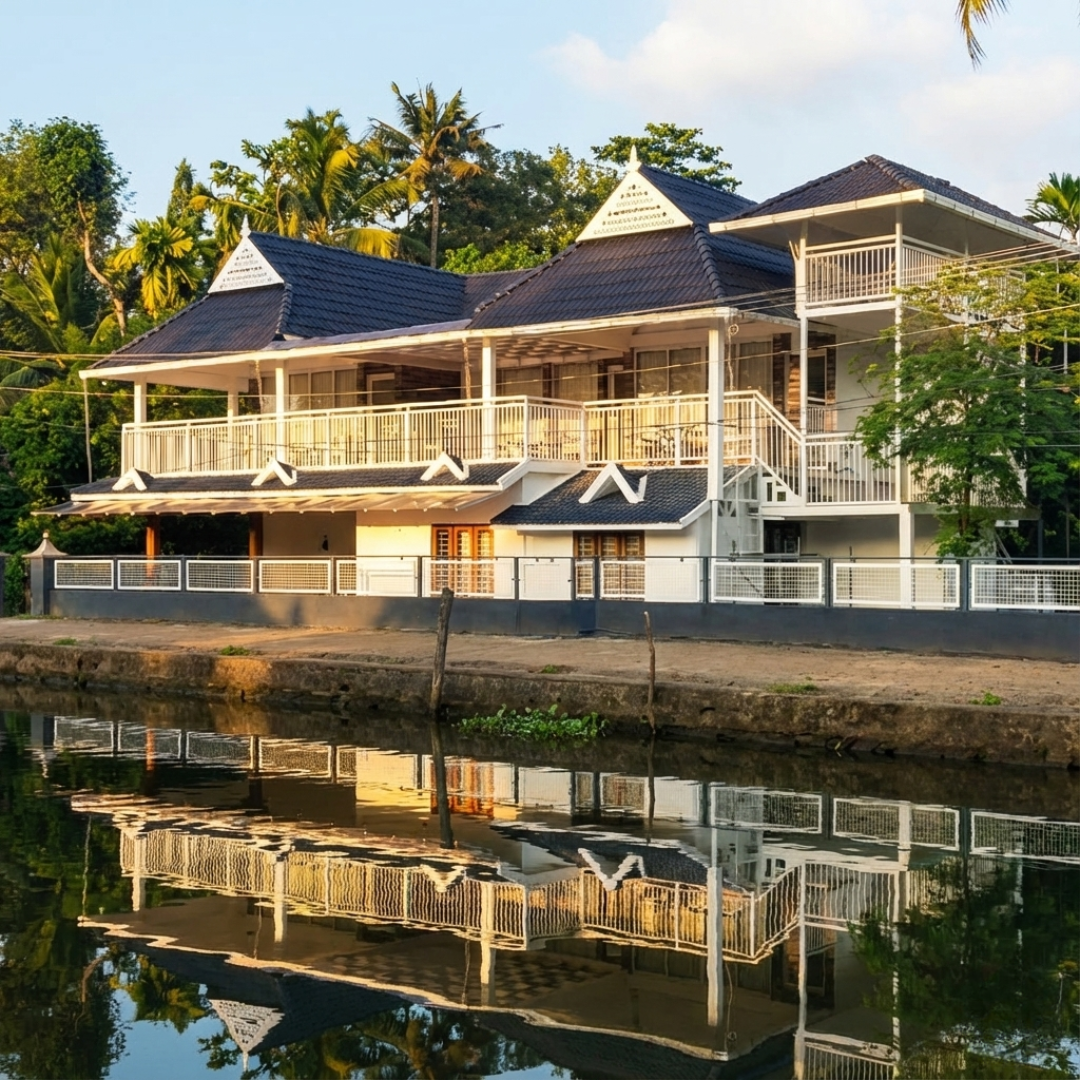
- Why Evaan’s Casa fits this search intent: Our island homestay is built around this exact idea. Every meal is home cooked food Kerala style, prepared here using vegetables from our patch and fish from the local auction.
The first sound I hear most mornings isn’t an alarm. It’s the low, rhythmic putter of a country boat’s diesel engine, carrying someone to the mainland for the day’s first errand. The air is cool and carries the damp, green smell of the backwaters and a faint trace of woodsmoke from a kitchen fire somewhere down the canal. I step outside with my tea, and the light is just starting to cut through the coconut palms, turning the water from slate grey to a soft gold. This quiet hour, before the day fully arrives, is when the island feels most like itself. It’s also when the kitchen starts thinking about lunch.
What Is Home Cooked Food Kerala?
Let’s strip away the fancy terms. Home cooked food Kerala is simply the way people here eat when they’re not in a restaurant. It’s not a curated tasting menu. It’s a plate of rice, a couple of different vegetable dishes cooked with grated coconut and spices, maybe some fish, and a bowl of rasam or moru curry. The magic is in the balance.
It’s sour, salty, spicy, and sweet all showing up to the same party. It’s the crackle of mustard seeds in coconut oil that announces a meal is seconds away. It’s the soft give of steamed tapioca with a fiery red chutney. This style of eating is deeply connected to the land and the water. Honestly, I’d say you haven’t really tasted Kerala until you’ve had a proper plate of home cooked food Kerala in a place where the ingredients traveled less than a kilometer.
The focus is on freshness, seasonality, and a kind of straightforward honesty. There are no heavy, creamy sauces meant to hide anything. A piece of karimeen (pearl spot fish) is wrapped in a banana leaf with some masala and grilled over coals. You taste the fish, the leaf, the heat, the tang. That’s it. That’s the whole point. When you search for an authentic experience of home cooked food Kerala, this is the heart of what you’re looking for.
Why Does the Island Location Matter?
You reach us by boat. There’s no other way. The ride from the jetty in Alappuzha is about six minutes, but it acts as a reset button. The noise of the town—the auto-rickshaws, the market chatter—fades into the hum of the outboard motor. You glide past water hyacinths, past women washing clothes at the water’s edge, past ducks paddling in formation.
By the time you step onto our little wooden dock, something has shifted. The pace is different. You notice the breeze. You hear kingfishers. This isolation isn’t about being cut off; it’s about being surrounded by the context of the food. The coconut you’ll eat today is from that tree over there. The prawns likely came from those very waters this morning. The island forces a slower rhythm, and meals become the anchors of the day, not just pit stops.
There’s a practical side, too. Since everything comes and goes by boat, planning is local and immediate. I head to the boat auction near the old bridge most mornings around seven. The catch comes in, the buyers gather, it’s over in twenty noisy, frantic minutes. That’s where dinner often starts. That connection—boat, water, market, kitchen, plate—is direct. It’s the shortest possible chain. This is what defines the home cooked food Kerala experience at our place. The island isn’t just a pretty backdrop; it’s the main ingredient.
What Home-Style Food Can You Expect Here?
Meals are served on a banana leaf when we can, which isn’t just for show. The leaf gives a faint, earthy aroma to the food. You’ll start with a pinch of salt placed at the top left corner, a small ritual. Then the servers come around with bowls.
First, the rice. It’s usually the red Kerala matta rice, nuttier and more robust than white rice. Then, the accompaniments march out. There might be a thoran—fine chopped beans or cabbage stir-fried with grated coconut and turmeric. A spoonful of olan, a gentle stew of white pumpkin and red beans in thin coconut milk. A sharp, fresh mango pickle. A pappadam for crunch.
The star could be a Meen Pollichathu, where a marinated fish is wrapped in banana leaf and cooked over a flame until the leaf blackens. You open it at the table, and the steam carries the scent of ginger, garlic, and curry leaves straight up. Or it could be a simple, stunning Kerala chicken curry, where the gravy is a complex blend of roasted spices and coconut, perfect for mixing with that red rice.
Breakfast is its own celebration. You might get soft, lacy appam—bowl-shaped fermented rice hoppers—with a mild, sweet coconut milk-based vegetable stew. Or puttu, the steamed cylinders of rice flour and coconut, paired with kadala curry, a black chickpea dish with a gravy that’s deeply spiced and satisfying. It’s fuel for a day of exploring, but it’s also a beloved tradition. Every element of this home cooked food Kerala style is prepared to complement the others, creating a complete and wonderfully messy plate.
Look, here’s the thing: we don’t have a sprawling menu. What we have is what’s good today. Some guests disagree with me on this, and that’s fair—they want more choice. But I’m probably biased, because I think the surprise is part of the fun. You get to eat what the season and the lake provide. That’s the soul of locally prepared meals here.
Jackson’s Practical Tips for Visitors
A few thoughts to make your time here, and your meals, better.
- Eat with your right hand. It feels strange at first, but mixing the rice and curries with your fingers changes the temperature and texture of the food. It becomes part of the experience. A small bowl of warm water with lime will appear afterwards for cleaning up.
- If you hear the call of the “chayakada” (tea shop) boat in the late afternoon, flag it down. For a few rupees, you get a small steel glass of sweet, milky chai and maybe a banana fritter. It’s a tiny, perfect island moment.
- Visit the local temple near the north end of the island, not for the deity, but for the massive old banyan tree beside it. Nobody goes there, and the shade is incredible in the afternoon heat. It’s my favorite reading spot.
- Pack a sense of culinary adventure. Say yes to the small, sour “kudampuli” (fish tamarind) in the fish curry. Try the “kanji” (rice porridge) if it’s offered for a light dinner. This is how you access the real depth of home cooked food Kerala.
- Most people skip this, but the light changes completely about thirty minutes before sunset. The water turns still and reflective. That’s the time to be on the dock, not inside. Bring your drink.
What Is the Best Time to Visit Alappuzha for Home Cooked Food Kerala?
Every season has its own flavor, literally.
Monsoon (June to September): This is my favorite time, but I know it’s not for everyone. The rain is intense. It drums on the tin roofs for hours. The backwaters swell and turn a rich, chocolatey brown. The upside? The air is cool, the landscape is explosively green, and the kitchen gets creative. This is the season for hot, steaming bowls of kanji with spicy accompaniments, and for fried snacks with tea. The monsoon also brings specific delicacies like “karimeen” in peak condition. Just be ready for plans to change with the weather. Boat rides might get postponed.
Winter (November to February): This is the classic tourist season for a reason. The weather is glorious—sunny, with low humidity and cool evenings. It’s perfect for everything. The produce is abundant, and the fish are plentiful. It’s the ideal time to enjoy a full Sadhya feast outdoors without breaking a sweat. The downside is that everyone else knows this too, so the mainland can feel busier.
Summer (March to May): It gets hot. I won’t sugarcoat it. The afternoons are fierce. But the mornings and evenings are beautiful. This is when mangoes appear, and you might get a stunning raw mango curry or a pickle made that day. The pace is slow, lazy in the best way. It’s a good time for a quiet, introspective stay where the biggest activity is moving your hammock to follow the shade. The home cooked food Kerala style adapts, featuring lighter, more hydrating dishes like more buttermilk-based curries and cooling salads.
Frequently Asked Questions About Home Cooked Food Kerala
How do we get to the island homestay?
You’ll take an auto-rickshaw or taxi to the Finishing Point jetty in Alappuzha. From there, we arrange a short six-minute boat transfer to bring you directly to Evaan’s Casa. We’ll coordinate the timing with you once your booking is confirmed. It’s easy, and the boat ride is your welcome ceremony.
Is the spicy food going to be too much for me?
Not gonna lie, the food has flavor and heat. But it’s not a contest. The kitchen can always adjust the spice levels if you ask in advance. The beauty of home-style Kerala food is in the blend of spices, not just the chili heat. Communicate your preference, and we’ll make sure you enjoy every bite without discomfort.
What should I pack that I might not think of?
A good mosquito repellent is essential, especially for evenings. A flashlight or headlamp is useful for the short walk from the main house to the cottages at night. Most importantly, pack loose, comfortable cotton clothing. You’ll want to be comfortable while sitting cross-legged for a meal or just lounging in the heat of the day.
Is there WiFi on the island?
Yes, we have WiFi, but it’s island WiFi. It works well for messaging and emails, but don’t expect to stream high-definition movies. Part of the point of being here is to disconnect a little. The sound of the water and the rustle of palm leaves is a better soundtrack anyway.
The light is fading now, and the evening boats are heading back in. I can smell mustard seeds and curry leaves hitting hot oil from the kitchen, which means dinner isn’t far off. That’s the real rhythm here. Sun, water, food, rest. It’s a simple loop, but it’s a profound one. This experience of home cooked food Kerala isn’t something you just observe; you sit down and become part of it. You get your hands messy. You taste the lake and the garden. You slow down enough to notice the difference. If that sounds like what you’re looking for, we’d be glad to have you at our table. You can find more about our little island place at Evaan’s Casa. Just listen for the boat.