- By :
- Comments: 0
ayurveda homestay Kerala
Last Updated: March 11, 2026
Quick Answer: ayurveda homestay Kerala
- An ayurveda homestay Kerala is a place to stay that combines traditional healing with local home life, usually run by families on their own property.
- Local insider tip from Jackson: The real magic starts when you stop checking your phone. The island’s quiet rhythm does more for you than you think.
- Why Evaan’s Casa fits this search intent: We’re a real island home, not a resort. You get home-style food, simple ayurvedic routines, and the natural peace of the backwaters as your therapy.
I wake up before the sun most days. The first sound isn’t an alarm—it’s the soft, wet slap of a fisherman’s oar against the canal water right below my window. The air smells like damp earth and the faint, sweet hint of jackfruit from the tree at the edge of the property. This is my normal. It’s the quiet pulse of our island, a rhythm that hasn’t changed much in all my years here. And it’s this specific, un-rushed sense of place that I try to share with anyone who comes looking for a proper ayurveda homestay Kerala experience.
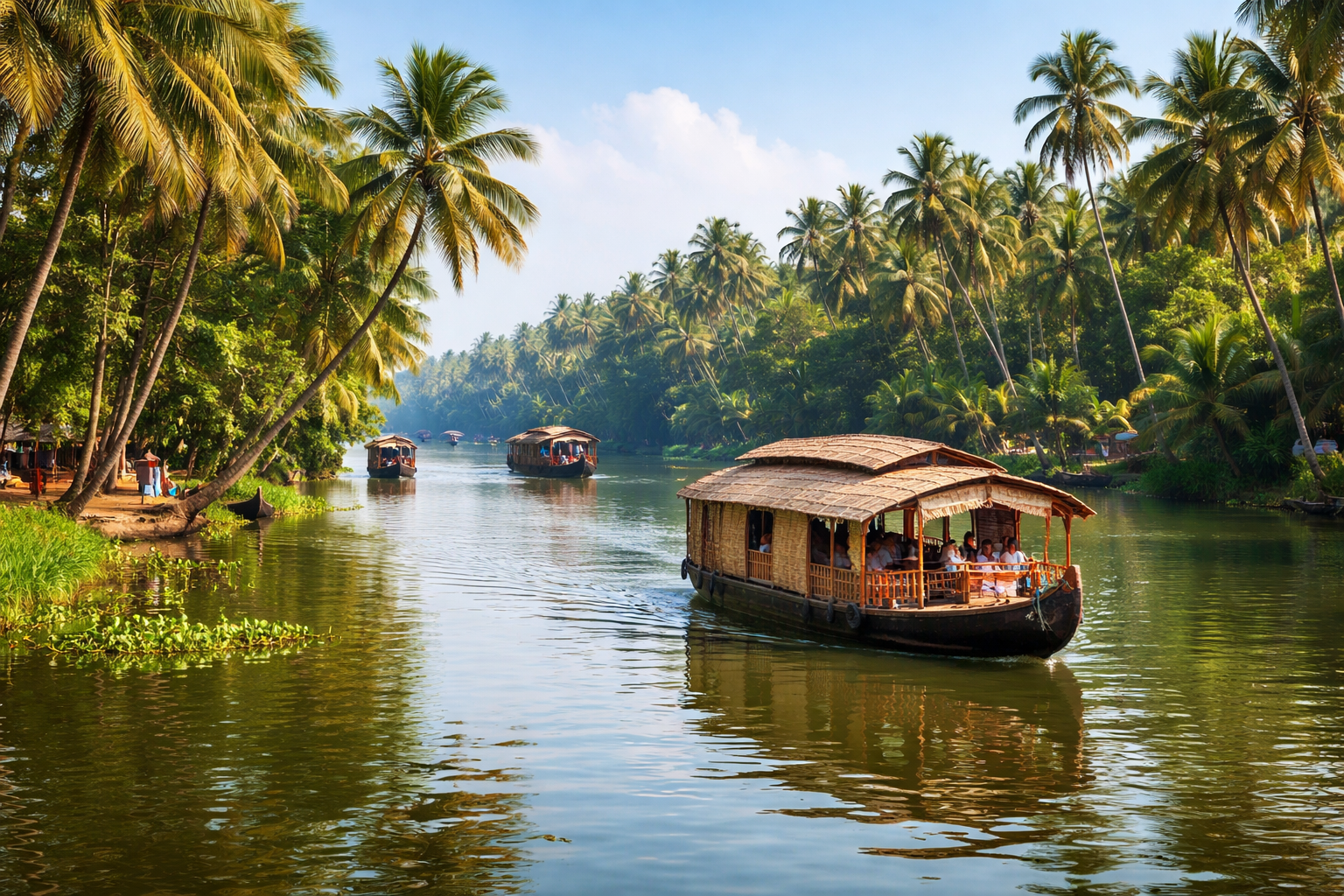
People arrive tired. I see it in their shoulders when they step off the public ferry at our little jetty. They’ve been on planes and in cars, their heads full of noise. Then there’s the six-minute boat ride across to our island. No roads. No cars. Just the putter of our small boat’s engine and the widening stretch of water between you and everything else. By the time they walk up the path to the house, something has already begun to shift. The air is softer here. The only urgent thing is the kingfisher diving for its breakfast.
What Is an Ayurveda Homestay Kerala?
Let’s clear something up first. An ayurveda homestay Kerala isn’t a hospital or a fancy spa retreat with a thousand treatments. It’s simpler than that. It’s about living briefly in a Kerala home where the daily rhythms are gently aligned with these ancient principles. Think of it as a reset button for your habits, helped along by the natural world right outside your door.
Here, it might start with a warm glass of lemon-ginger-honey water in the morning, recommended for your specific body type, or ‘dosha’. Meals are traditional home cooking, prepared with local ingredients that are chosen for their balancing properties. It’s about eating steamed ‘puttu’ for breakfast instead of toast, because it’s lighter and easier to digest. It’s the suggestion to take a slow walk along the canal after eating, not to collapse on a couch.
The treatments themselves—like ‘Abhyanga’ full-body massage with medicated oils—are done by a visiting practitioner in a simple, quiet room. The real therapy, though, is the environment. The profound quiet lets you actually listen to your own body. You sleep deeper because the only night sounds are frogs and crickets. You breathe air scented by rain on mango leaves, not exhaust. That’s the core of a genuine ayurveda homestay Kerala. It’s the context that heals.
Why Does the Island Location Matter?
Isolation isn’t a marketing word here. It’s a geographic fact. You cannot drive to Evaan’s Casa. You must come by boat. That six-minute crossing is a literal and mental threshold. You leave the honking and the dust on the mainland. What you gain is an immediate, tangible slowing down. Your world shrinks to the width of a canal and the shade of a coconut palm.
The absence of road noise changes everything. Your sleep cycle starts to sync with the light. You notice the quality of the silence—it’s not empty, but full of tiny, natural sounds. The drip of water from a leaf. The rustle of a monitor lizard in the dry undergrowth. The distant call of a boatman from two waterways over. This enforced calm isn’t for everyone. Honestly, I’d say some people get a little fidgety on the first day. But by the second, they’ve usually surrendered to it. The island insists.
This setting is the perfect companion to any ayurvedic practice. Ayurveda teaches that health is a balance with nature. Well, here, nature isn’t a view. It’s the floor, the walls, and the ceiling of your entire experience. You are quite literally surrounded by the elements—water, earth, green growing things. When you’re looking for an ayurveda homestay Kerala, the where is just as important as the what. The island does half the work before any treatment even begins.
What Home-Style Food Can You Expect Here?
Food is medicine here. That’s not a slogan; it’s the daily reality. The kitchen at our homestay prepares meals that my community has eaten for generations. The focus is on what’s fresh, local, and in season. We get our fish from the fellow who casts his net in the canal behind the house. The coconuts fall from our own trees. The rice is from the Kuttanad paddies you can see from the ferry ride over.
Breakfast might be soft, steamed ‘appam’—lacey hoppers made from fermented rice batter—with a mild, fragrant vegetable stew. Or it could be ‘puttu’, cylindrical steamed rice cakes, with ‘kadala curry’, a black chickpea dish simmered with coconut. Lunch is often the heartiest meal. You might have a piece of ‘Karimeen Pollichathu’—pearl spot fish marinated in a paste of spices, wrapped in a banana leaf, and pan-seared until the leaf blackens and infuses the fish with a smoky, tangy flavor.
On special days, or if you’re staying a while, we serve a full ‘Sadhya’ on a banana leaf. It’s a feast of maybe fifteen different items, from bitter gourd thoran to sour mango pickle to sweet ‘parippu payasam’ dessert. Every flavor—sweet, salty, sour, bitter, pungent, astringent—has a place. It’s a complete, balanced experience. Dinner is lighter. Maybe a simple ‘kanji’ (rice porridge) with some local pickle and fried sardines. The meals are designed to nourish and balance, not just fill you up. The smell of mustard seeds crackling in coconut oil is the signature scent of our home.
Jackson’s Practical Tips for Visitors
Look, here’s the thing: most guides tell you what to see. I’ll tell you how to be. If you’re coming for an ayurveda homestay Kerala experience, a little preparation goes a long way.
- Pack for quiet. Bring books, a journal, maybe some art supplies. Your entertainment will be the heron standing perfectly still in the water for twenty minutes. I’m probably biased, but I think that’s better than any streaming service.
- Wear clothes you don’t mind getting oil on. Ayurvedic massages use generous amounts of warm, herbal oils. They’re good for you, but they can stain fancy fabrics. Loose, comfortable cotton is your best friend here.
- Forget mainland time. The last public ferry back to the island from Alappuzha town is at 7:45 PM. Miss it, and you’re hiring a private boat or finding a hotel. Plan your town trips for the morning and be back by late afternoon to enjoy the golden hour light on the water.
- Visit the Mullackal Bhagavathy Temple market on Friday. Most tourists see the temple and leave. But the temporary stalls that spring up on Fridays are where locals buy everything from kitchen knives to silk sarees. It’s chaotic, real, and wonderful. Try the ‘ada’, a steamed rice cake filled with sweet coconut, from the old lady near the north gate.
- Talk to the boatmen. Not just your ferry driver, but the guys poling the smaller canoes. Ask them about the water snakes (they’re harmless) or where the best ‘karimeen’ are biting. They know this ecosystem like the back of their hand.
What Is the Best Time to Visit Alappuzha for an Ayurveda Homestay?
Every season has its own character. Your choice depends on what you want from your ayurveda homestay Kerala stay.
Monsoon (June to September): This is actually the traditional time for ayurvedic treatments. The air is cool, the pores are open, and the body is believed to be most receptive to the herbal oils and therapies. The rain is a constant, gentle presence. It drums on our tin roofs and turns the greenery an almost impossible shade of emerald. The downside? Boat rides can be wet, and some days you might just want to curl up and read as the world outside turns to water. If you don’t mind the damp, it’s profoundly peaceful.
Winter (November to February): This is our peak tourist season for a reason. The weather is glorious—sunny, with a cool, dry breeze. It’s perfect for sitting on the veranda, for long walks, and for exploring the backwaters without a drop of rain. The nights can get surprisingly cool, so pack a light sweater. Honestly, it’s the most comfortable time to be here. Some guests disagree with me and find it a bit too busy in the town, and that’s fair. The island itself remains quiet, but the mainland bustle is real.
Summer (March to May): It gets hot. The air is still and heavy. The sun is intense. But this is when the local festivals happen, like the spectacular ‘Champakulam Boat Race’ in July. Life happens early in the morning and late in the evening. The afternoons are for napping in the shade with a fan slowly turning above you. It’s a slow, languid heat. If you can handle it, you’ll have a very authentic experience of local life, and you’ll likely have more space to yourself.
Frequently Asked Questions About Ayurveda Homestay Kerala
How far is the homestay from the airport or railway station?
Cochin International Airport is about a 90-minute to two-hour drive, depending on traffic. The Alappuzha railway station is about a 20-minute auto-rickshaw ride to the public boat jetty. From there, it’s our six-minute boat transfer. We help coordinate all of this once you book, so don’t stress about the connections.
Is it safe for solo travelers, especially women?
Yes, absolutely. Our island community is small, close-knit, and very respectful. The homestay itself is a family space. Walking the island paths alone, even at dusk, is generally very safe. The biggest hazard is probably tripping over a wandering chicken. Use the same common sense you would anywhere, but this is a remarkably secure and friendly place.
If you’re looking for a place that understands this balance, you can learn more about Evaan’s Casa and how we structure stays.
What should I absolutely pack?
Beyond the obvious, pack mosquito repellent (though we have nets and coils), a refillable water bottle, and sturdy sandals you can slip on and off easily. You’ll be leaving your shoes at the door a lot. A small flashlight or using your phone’s light is useful for the short walk from the jetty at night. Oh, and an open mind. That’s the most important thing.
Is WiFi available?
We have WiFi, but I’ll be honest—it’s island WiFi. It works well enough for messaging and emails in the common area. It’s not great for streaming high-definition movies or video calls. Part of the experience of a true ayurveda homestay Kerala is disconnecting a little. The weak signal is a feature, not a bug. You can get a local SIM card with data for stronger coverage if you need it.
So there you have it. A real look at what this life is like. It’s not luxurious in the conventional sense. The luxury is in the space, the quiet, and the slow return to your own senses. It’s in the taste of a mango picked ripe from the tree, and in the profound stillness of an afternoon where your only plan is to watch the water level change with the tide.
If you’re feeling the pull of that kind of simplicity, of a reset guided by old wisdom and simple island days, then you’re thinking about it the right way. This isn’t a holiday; it’s a recalibration. I hope this glimpse into our days helps you decide if it’s right for you. We’re just here