- By :
- Comments: 0
sustainable tourism homestay
sustainable tourism homestay
Last Updated: March 09, 2026
Quick Answer: sustainable tourism homestay
- A sustainable tourism homestay is a place to stay that actively works to protect the local environment, support the community, and give you a real, unhurried experience of a place.
- Local insider tip from Jackson: The best way to see the backwaters is from a small, silent canoe at 6:30 AM, before the big tour boats start their engines and the water gets choppy.
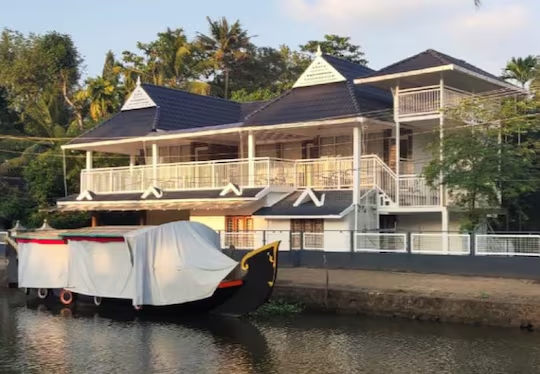
- Why Evaan’s Casa fits this search intent: We are a small, family-run place on a quiet island, built with local materials, powered by the sun, and deeply connected to the rhythms of life here.
I woke up this morning to the sound of rain on our tin roof, a steady, comforting drumbeat. The air smelled of wet earth and the faint, sweet woodsmoke from a neighbor’s kitchen fire. This is the island’s alarm clock during the monsoon, and it never gets old. It’s in these quiet moments, before the first boat engine sputters to life, that I remember why we built this place the way we did.
My name is Jackson Louis. I grew up right here, on this narrow strip of land in the Alappuzha backwaters. The water was my playground, the paddy fields my endless green carpet. After years away, I came back with a simple idea: to share this home, not as a spectacle, but as a living, breathing place. That idea became Evaan’s Casa. This isn’t just a business for me. It’s an extension of my home, and a commitment to the land and water that raised me.
What Is a Sustainable Tourism Homestay?
You hear the term a lot these days. Let me tell you what it means to me, here on the ground. A sustainable tourism homestay is about connection, not just conservation. It means the water from your shower is heated by the sun. The walls of your room are made from laterite stone and coconut wood, materials pulled from this very earth. It means the vegetables in your meal come from Rajan’s plot three canals over, and the fish was bought from Sasi’s catch this morning at the Vattakayal landing point.
It’s a model that asks a little more from us, the hosts. We manage our own waste, compost everything organic, and avoid plastic like it’s a bad rumor. But it also asks something from you, the guest. It asks you to slow down. To listen to the water. To understand that the true luxury here is silence and space and the taste of a mango picked an hour ago.
This kind of travel leaves the lightest footprint. It keeps money within our small island community. Every choice, from the soap we provide to the way we suggest you explore, is filtered through that lens. Honestly, I’d say a real sustainable tourism homestay should feel effortless. You shouldn’t feel like you’re making sacrifices. You should just feel more present, more part of things.
Why Does the Island Location Matter?
Access is by a six-minute country boat from the mainland. There are no cars here. No roads. Just winding paths, canals, and the constant, gentle lap of water against stone steps. That short boat ride is a decompression chamber. It physically separates you from the rush of the main town. You can feel your shoulders drop as the boatman poles away from the jetty.
The isolation isn’t about being cut off. It’s about being immersed. Your world shrinks to the scale of the island. Your soundtrack becomes the kingfisher’s dive, the rhythmic thump of a washing stone, the distant call of a vegetable vendor in his canoe. You notice the light changing on the water. You start to recognize the postman’s boat by the sound of its particular puttering engine.
This setting is the foundation of our entire philosophy. Operating a sustainable tourism homestay on an island isn’t a choice; it’s a necessity. We have to be careful with resources because bringing in supplies takes effort. We have to support our neighbors because we rely on each other. The island enforces a pace and a mindfulness that a roadside hotel never could. You arrive as a visitor, but for a few days, you live as we do.
What Home-Style Food Can You Expect Here?
Food here is about freshness and time. It’s the smell of mustard seeds and curry leaves crackling in coconut oil that greets you when you walk in from the garden. We serve traditional home cooking, prepared in the kitchen at our homestay. The goal is to give you a true taste of a Keralite home, where meals are an event, not a transaction.
Breakfast might be soft, lacy appam with a subtly sweet coconut milk stew, or puttu—steamed cylinders of rice flour and coconut—with rich kadala curry made from black chickpeas. Lunch is often the star. You might have a whole Karimeen (pearl spot fish), marinated in spices, wrapped in a banana leaf, and pan-seared to perfection—that’s Pollichathu. It comes with a mound of red rice, a tangy mango pickle, and a crisp salad of local greens.
On request, we can serve a proper Kerala Sadhya. This is a feast served on a fresh banana leaf, with maybe a dozen different small dishes. There will be sambar, avial, thoran, pachadi, and more. It’s a riot of flavors and textures, each one distinct. You eat with your hand, feeling the cool leaf, mixing the rice and dals. It’s a full sensory experience. The ingredients travel maybe a few hundred meters. The recipes have traveled generations.
We source with a hyper-local focus. The coconuts are from our trees. The tapioca comes from the field behind the house. The prawns? Caught in the canal out front yesterday. This direct line from soil and water to plate is a core part of our sustainable tourism homestay model. It reduces waste, supports local fishermen and farmers, and honestly, the taste is just different. It has life in it.
Jackson’s Practical Tips for Visitors
Look, here’s the thing. Most people come with a checklist. I suggest you come with an open schedule. To help you settle in, here are a few practical tips from someone who’s been here a while.
- Pack Light, But Pack Smart. You’ll be crossing water to get here. A soft bag is easier than a hard suitcase on a wobbly boat. Bring comfortable shoes for walking the paths, and a pair of sandals you don’t mind getting wet.
- Embrace the Early Morning. I’m probably biased, but the island is magic between 5:30 and 7 AM. The light is soft, the air is cool, and the water is like glass. This is the time for a silent canoe ride. You’ll see water lilies opening, otters playing, and the whole backwaters ecosystem waking up. Most people skip this, opting to sleep in, and they miss the best show.
- Carry Cash for Small Stalls. While we and bigger shops take cards, the best experiences are often small. The old lady selling spicy banana chips from her porch, the boatman who will take you on an impromptu canal tour, the tiny tea shop by the ferry point—these run on cash.
- Visit the Local *Kadavu* (Bathing Steps). Not for bathing, but for observing. Around sunset, the village *kadavu* becomes a social hub. Women wash clothes, kids splash, men discuss the day’s catch. It’s a beautiful, unfiltered slice of daily life. Sit quietly on the steps for ten minutes. You’ll learn more than from any guidebook.
- Ask Before You Photograph People. This should be obvious, but it often isn’t. A smile and a gesture asking for permission go a very long way. Respect is the most important thing you can pack.
What Is the Best Time to Visit Alappuzha for a Sustainable Tourism Homestay?
Every season paints the island a different color. Each has its own rhythm and reason to visit.
Monsoon (June to September): This is my favorite, but I know it’s not for everyone. The rains are heavy, green, and constant. The backwaters swell, and the paddy fields turn into vast mirrors. The sound is incredible—rain on broad leaves, on the roof, on the water. It’s cool and deeply peaceful. The downside? Boat trips can be weather-dependent, and you will get wet. But if you love the drama of nature and don’t mind a daily drizzle (or downpour), it’s transformative. This is when our sustainable tourism homestay model is most evident, as we harvest rainwater and the whole island feels lush and alive.
Winter (November to February): This is the classic tourist season for a reason. The weather is perfect—sunny, warm days and cool, breezy nights. The skies are clear. It’s ideal for all activities: houseboat stays, canoeing, cycling on the mainland. The flip side is that it’s busy. The main waterways can get crowded. Booking ahead is essential. It’s a beautiful, comfortable time, but you’re sharing the view with more people.
Summer (March to May): It gets hot. Let’s be honest. The sun is strong by midday. But the mornings and evenings are still lovely. This is a great time for budget travelers, as rates are lower. Life on the island adapts; activity shifts to the shade and the cooler parts of the day. The mangoes are in season, which is a huge plus in my book. It’s a quiet, slow time to visit if you don’t mind the heat.
Frequently Asked Questions About Sustainable Tourism Homestays
How do I get to your island homestay?
You’ll take an auto or taxi to our designated jetty in Alappuzha town. From there, it’s a six-minute ride on a shared country boat. We coordinate the timing with you. The boat drops you at our island jetty, and I’ll be there to walk you the final two minutes to the house. It’s part of the adventure.
Is it safe, especially for solo travelers or families?
Yes, absolutely. Our island community is close-knit and very safe. Paths are well-lit at night with solar lamps. For families, kids love the freedom to explore and the boat rides. For solo travelers, it’s peaceful and welcoming. The only thing to watch for are the canal edges—they don’t have railings, so supervision with young children is a must.
What should I definitely bring?
Beyond your usual travel items, bring mosquito repellent (we provide coils, but personal spray is good), a refillable water bottle (we have filtered water), a small flashlight for night walks on the paths, and a sense of curiosity. Leave your city hurry behind.
Is WiFi available?
We have WiFi, but it’s island-speed. It works for messaging and emails, but don’t expect to stream high-definition movies. Some guests disagree with me on this, and that’s fair, but I see the spotty connection as a feature. It encourages you to look up, to talk, to read a book on the verandah. Disconnection is part of the sustainable tourism homestay experience here.
Running this place has taught me that travel doesn’t have to be about consuming a place. It can be about contributing to it, even in a small way. Every time you choose a meal made here, a tour led by a neighbor, or simply choose to sit and watch the day go by, you’re participating in a model that helps this little island thrive. It’s a gentle kind of tourism.
If this sounds like the kind of travel you’re looking for, a real and rooted experience, then you might just find your spot here. We’re not a resort. We’re a home, with all the simplicity and warmth that implies. The water is still cool in the mornings, the karimeen is still sizzling in the pan, and the hammock on the verandah is always waiting. You can learn more about our home and how we do things at Evaan’s Casa. Hope to welcome you soon.
Plan your stay at Evaan’s Casa
- Lake view homestay in Alleppey (Alappuzha)
- Where to stay in Alleppey: the complete guide
- Alleppey room booking: rooms and prices from ₹1,900
- Budget homestay in Alleppey under ₹2,000
- Backwater homestay on Vembanad Lake
- Punnamada homestay, Alappuzha
- Family homestay in Alleppey
- Honeymoon package and couple stay
Book direct on WhatsApp +91 88484 96667