- By :
- Comments: 0
cultural homestay Kerala
Last Updated: March 08, 2026
Quick Answer: cultural homestay Kerala
- A cultural homestay Kerala experience is about living in a local home, sharing meals and daily rhythms, and connecting with the authentic life of a place beyond hotel walls.
- Local insider tip from Jackson: The real magic happens in the quiet hours. Wake up before sunrise to hear the water and see the mist lift off the canals.
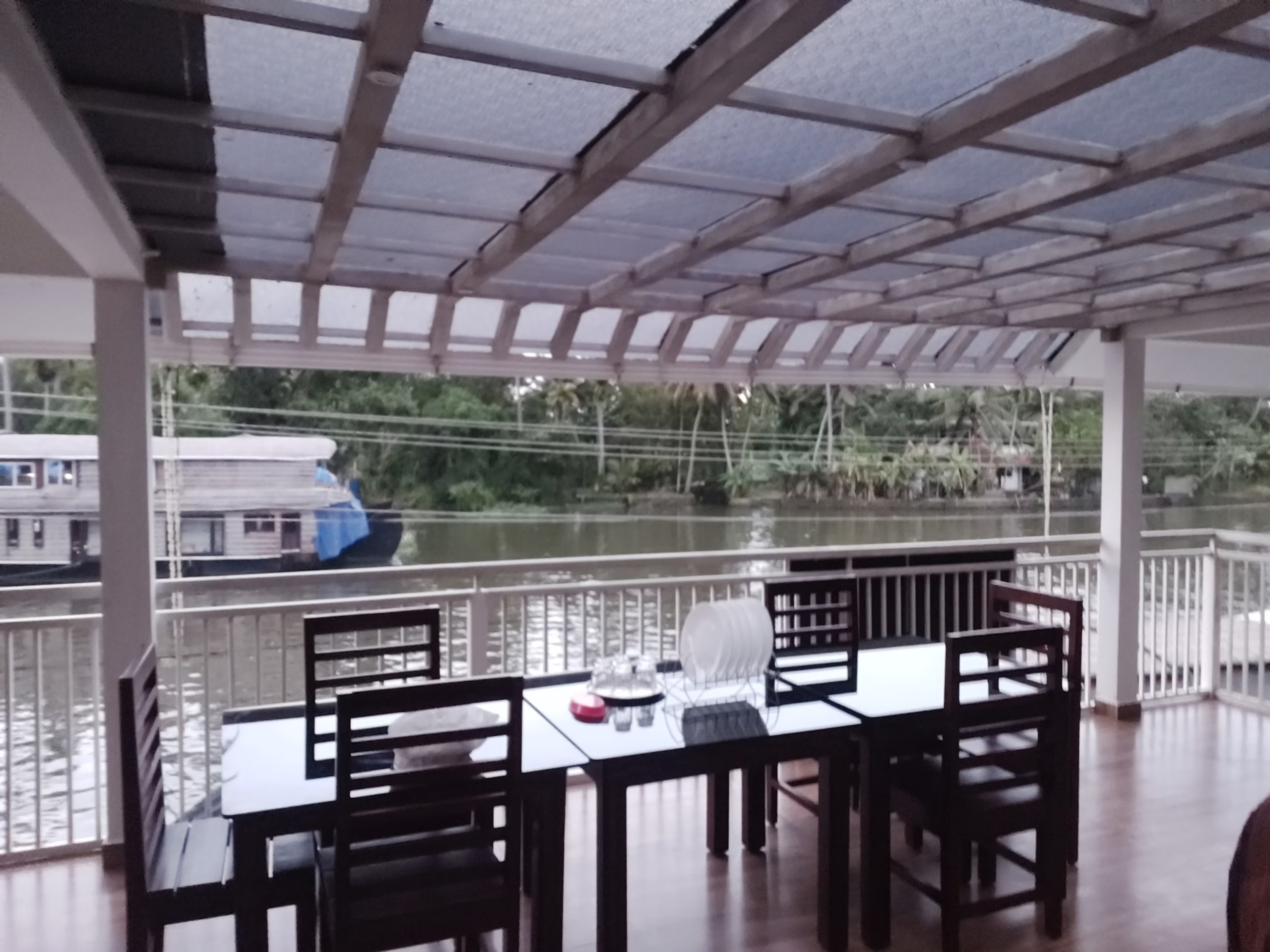
- Why Evaan’s Casa fits this search intent: Our place is a working family home on a small island, offering a genuine, slow-paced immersion into backwater life with home-style food and direct access to village culture.
I remember the sound of the water against the wooden poles of our jetty this morning. It was that soft, pre-dawn lapping, a sound so familiar I can feel it in my bones. The sky was just shifting from deep indigo to a soft grey, and the air carried the faint, damp scent of overnight rain on jackfruit leaves. That quiet hour, before the first country boat putters by, is when this island feels most like itself. It’s the feeling I want people to find here.
So many guests arrive carrying the buzz of the city, the stress of travel, the noise of planning. Their shoulders are up by their ears. I see it when I meet them at the mainland boat point. But after that six-minute ride across the water, something changes. The road ends. The only way to our door is by water. That simple fact, the shift from wheels to a wooden boat, starts to untangle things. By the time they step onto our jetty, they’re already listening differently.
What Is a Cultural Homestay Kerala?
Let’s strip away the fancy words. A cultural homestay Kerala is not a themed hotel. It’s an invitation into the pace and rhythm of a local home. It’s about the taste of a lunch prepared with vegetables from the garden just behind the house. It’s the sound of our neighbor, Ramesh, calling across the canal to his brother about the afternoon’s fishing. It’s the sight of my wife sorting rice on the verandah, not as a performance, but because that’s what she does on a Tuesday.
You’re not a spectator here. You’re a temporary part of the neighborhood. You’ll wave to the kids being rowed to school. You’ll learn to distinguish between the diesel thrum of a public ferry and the quieter sputter of a fisherman’s canoe. The culture isn’t something presented on a stage at 7 PM. It’s in the fabric of the day. This is the core of a genuine cultural homestay Kerala experience.
It’s slower. It’s more personal. Honestly, I’d say it can be a bit messy sometimes, in the best way. A sudden monsoon shower might change the afternoon’s plans. The power might flicker off for twenty minutes. This is real life on an island. Choosing this kind of stay means you’re choosing the real thing over a polished replica.
Why Does the Island Location Matter?
The six-minute boat ride is everything. It’s a physical and mental threshold. Once you cross that channel, the mainland’s constant hum of scooters and autorickshaw horns just vanishes. It’s replaced by the squawk of a kingfisher, the rhythmic splash of an oar, the distant chorus of evening prayers from the temple on the opposite shore.
There are no cars here. No shops, only a couple of houses and lots of greenery. Your world becomes walkable, or rather, boat-able. This isolation isn’t about being cut off. It’s about being connected to something different. Your attention naturally turns outward to the water, the sky, the line of coconut trees against the horizon. You notice the small things.
Most people skip this, but I always tell guests to just sit on the jetty for a while. Don’t do anything. Just watch the water traffic. You’ll see it all: the vegetable vendor’s canoe piled high with gourds, the schoolboat packed with kids in bright blue uniforms, the silent, gliding snake boats practicing for the races. This is our main street. This isolation forces a gentle slowness that is the true luxury of a cultural homestay Kerala on an island.
You sleep deeper here. The silence at night is profound, broken only by the occasional plop of a fish or the rustle of a palm frond. It resets your clock to sunrise and sunset. That’s the island’s gift.
What Home-Style Food Can You Expect Here?
The food comes from here. I mean that literally. The coconuts are from our trees. The tapioca and many of the greens are from the garden. The karimeen (pearl spot fish) was likely swimming in these canals yesterday. The kitchen at our homestay works with these ingredients, prepared in traditional ways that highlight their freshness.
Breakfast might be soft, lacy appam with a subtly sweet coconut milk-based vegetable stew, or puttu—steamed cylinders of rice flour and coconut—with a rich, dark kadala curry made from black chickpeas. The smell of roasting coconut for the chutney is a morning scent here, mixed with woodsmoke from the hearth.
Lunch is often the main meal. You might have a whole karimeen pollichathu, marinated in a paste of spices, wrapped in a banana leaf, and pan-roasted until the leaf blackens and infuses the fish with a smoky, tangy flavor. It’s served with rice, a tart moru curry (buttermilk based), and a thoran of finely chopped beans or cabbage stir-fried with grated coconut.
On request, we can serve a traditional Kerala Sadhya on a banana leaf. It’s an array of vegetarian dishes—from the sour punch of puli inji (ginger-tamarind chutney) to the earthy comfort of olan (white pumpkin in coconut milk). Each item has its place on the leaf, and you eat with your hand, which changes the experience. You feel the temperature and texture of the food directly. It’s a complete, balanced, and deeply satisfying meal. This is the heart of home-style Kerala food, and it’s a central part of the immersion at a place like Evaan’s Casa.
Snacks? Always. Maybe some crispy banana fritters with evening tea, or a handful of sweet, small bananas called ethapazham. The food isn’t fancy or plated for a photo. It’s nourishing, flavorful, and made for sharing. I’m probably biased, but I think you taste the place in every bite.
Jackson’s Practical Tips for Visitors
Alright, some straight talk from someone who’s lived here forever. If you’re looking for a cultural homestay Kerala experience, these tips will help you get the most out of it.
- Pack Light, But Pack Smart: You’re taking a boat. A hard-shell roller suitcase is a nightmare on a narrow country boat. A soft duffel or backpack is king. Also, leave your fancy heels. You’ll want sandals you can slip off easily and that can handle a bit of mud.
- The Boat Timings Are Real: The last public ferry from the mainland to our island cluster is at 7:45 PM. Miss it, and you’ll need to charter a private boat, which costs more. Plan your day trips around this. It’s a good thing—it encourages you to be home for the beautiful island evening.
- Bring a Torch (Flashlight): This is the tip most blogs miss. Our paths are not brightly lit at night. A small torch on your phone or a pocket one is essential for the short walk from the jetty to the house after dark. It’s also great for spotting the shining eyes of a water bird in the canal.
- Visit the Local *Chantha* (Market): Don’t just go to the big Alappuzha market. Ask me to point you to the tiny village *chantha* that happens on Wednesday mornings. It’s a riot of colors, smells, and sounds. You’ll see baskets of dried fish, piles of fresh turmeric, and vendors selling everything from betel leaves to plastic buckets. It’s pure, unfiltered local life.
- Learn Three Malayalam Words: “Nanni” (Thank you), “Sukhamano?” (Are you comfortable/well?), and “Seri” (Okay/Alright). Using them, even awkwardly, opens up smiles and conversations instantly. It shows respect.
- Embrace the Pace: Things might not happen on the minute. The boat might be late because the boatman helped someone haul a sack of rice. Go with it. This isn’t a place for a tightly scheduled itinerary.
What Is the Best Time to Visit Alappuzha for a Cultural Homestay?
Everyone asks this, and the truth is, it depends on what you want from the experience. Each season paints the backwaters a different color.
Monsoon (June to September): This is my favorite, but I know it’s not for everyone. The rain is intense, dramatic, and beautiful. It drums on our tin roofs and turns the canals a silty green. The air smells incredibly clean. Everything is a lush, overwhelming green. The downside? You will get wet. Boat trips can be cancelled if the weather is rough. But if you love the sound of rain and want to see the landscape at its most powerful and alive, it’s unforgettable. Just pack a good raincoat and waterproof bags for your electronics.
Winter (November to February): This is the classic, postcard season. The weather is perfect—sunny, warm days and cool, breezy nights. The sky is clear. It’s the best time for long, leisurely canoe rides and sunset views. The obvious downside is that it’s also peak tourist season. The main waterways can get busy with houseboats. Our island remains quiet, but you’ll feel the buzz more in town.
Summer (March to May): It gets hot. Really hot, especially in May. The air is still and heavy. But the mornings and evenings can be lovely. This is when the local mangoes are in season, an absolute joy. It’s also the quietest time for visitors, so you’ll have the canals mostly to yourself. If you don’t mind the heat and seek solitude, it has its own stark beauty. Hydrate constantly.
Look, here’s the thing: there’s no “bad” time for a cultural homestay Kerala experience. Each season offers a different facet of life here. The monsoon reveals the rhythm of the water. The winter shows the brilliance of the light. Summer offers the deep quiet of the land.
Frequently Asked Questions About a Cultural Homestay Kerala
How far is Evaan’s Casa from the Alappuzha boat jetty?
It’s a six-minute boat ride from the Finishing Point jetty. There’s no road access. I’ll meet you at the jetty with our boat. The total travel time from the Alappuzha bus stand or railway station to our door is usually about 20-30 minutes, including the boat.
Is it safe, especially for solo travelers or families?
Yes, absolutely. Our island community is small, close-knit, and very safe. Crime is virtually unheard of here. Kids play freely. For solo travelers, especially women, the environment is secure and respectful. The main considerations are the natural ones—being mindful near the water and using a torch at night.
What should I definitely bring?
Beyond your usual travel stuff, pack mosquito repellent (we have nets, but it’s wise), a flashlight, comfortable cotton clothing, a refillable water bottle, and an open mind. Oh, and binoculars if you like birds. You’ll see so many.
Is WiFi available?
We have a WiFi connection, but I have to be honest—it’s island internet. It works for messaging and checking emails, but don’t expect to stream high-definition movies. Some guests disagree with me on this, and that’s fair, but I actually think the spotty connection is a feature. It helps you disconnect and look at the real world around you.
This place, this life on the water, has been my whole world. Sharing it with guests who truly want to see it, to feel its slow pulse, is what makes running this homestay meaningful. It’s not about providing a service checklist. It’s about sharing a morning, a meal, a view of the heron standing perfectly still in the shallows. A real cultural homestay Kerala experience leaves you with those quiet impressions—the