- By :
- Comments: 0
homestay in Kuttanad region
Last Updated: March 05, 2026
Quick Answer: homestay in Kuttanad region
- A homestay in Kuttanad is a chance to live with a local family on the backwaters, far from hotel crowds, where life moves with the rhythm of the water and the paddy fields.
- Local insider tip from Jackson: The real magic happens at dawn. Ask me to wake you for the sunrise boat ride. You’ll see the water turn gold and hear the village wake up—the splash of morning baths, the clang of milk pots.
- Why Evaan’s Casa is the right place for this: Our family has lived on this island for generations. We don’t just host you; we bring you into our home, cook meals from our kitchen, and share stories on the verandah as the houseboats glide past.
I remember the exact sound of my grandfather pushing off in his wooden canoe. It was always before first light. A soft scrape of wood on the muddy bank, then the quiet dip of his oar. The mist would hang over the canal like a blanket. That sound was my alarm clock for eighteen years.
It’s the same quiet I seek now, standing on our jetty at Evaan’s Casa. The air is cool and carries the damp, green smell of water hyacinth. A kingfisher dives, a blue flash breaking the grey morning. This is the Kuttanad I know. It’s not just a place on a map. It’s the feeling of home, deep in your bones.
What Is a Homestay in the Kuttanad Region?
Forget the brochures for a moment. A homestay here isn’t a themed resort experience. It’s an invitation. You cross the water and step onto an island that has been in a family for a hundred years. You sleep in a room that faces the paddy fields. You eat what the family eats that day.
Kuttanad is called the rice bowl of Kerala. But it’s more than fields. It’s a vast, flat landscape of water and green, stitched together by narrow canals. Life here is built on water. Roads are an afterthought. Your host’s father was probably a fisherman or a rice farmer. Their stories are the history of this land.
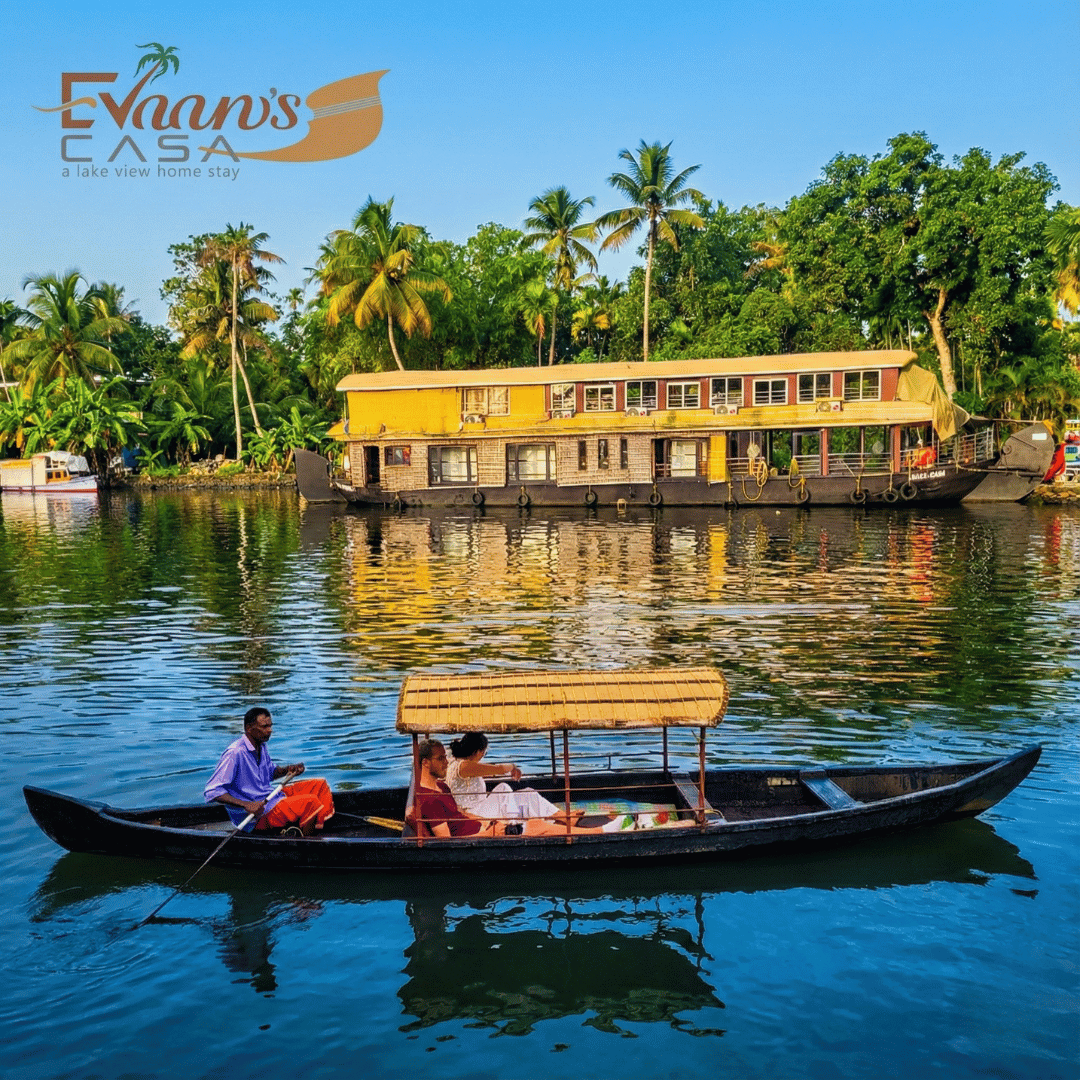
You become part of the household’s rhythm. You might hear the sizzle of mustard seeds from the kitchen as my mother starts lunch. You’ll see my uncle mend his fishing nets on the porch. The television is off. The show is outside your window—a slow procession of country boats, herons, and shifting light on the water.
Why Does the Island Location Matter?
The six-minute boat ride from the mainland is your decompression chamber. With each chug of the boat engine, the noise of the town falls away. The phone signal gets patchy. The list in your head starts to quiet down. You arrive at our island with a different mindset.
There is no road here. No cars, no honking. The only way in or out is by boat. This creates a natural, gentle isolation. It forces you to be present. Your world shrinks to the dimensions of our island: the main house, the garden, the water’s edge, the sky.
At night, the silence is profound. It’s not empty silence. It’s full of life. You hear the lap of water against the bund. The distant call of a night bird. The rustle of palm leaves. You look up and see stars, clear and bright, without the competition of electric lights. You sleep deeply, rocked by the quiet.
What Food Can You Expect Here?
Every meal comes from our kitchen, not a commercial kitchen. The smell of woodsmoke and roasting coconut tells you lunch is being prepared. My mother, Annamma, is in command. She cooks the food of our Christian family, with recipes passed hand to hand.
You must taste Karimeen Pollichathu. It’s pearl spot fish, maraded in a masala of ginger, garlic, and chili, wrapped in a banana leaf, and pan-roasted. The leaf infuses the fish with a smoky, earthy flavor. We catch the fish from our own waters. It tastes of the lake.
For breakfast, expect soft, steamed puttu with kadala curry, or fluffy appam with a creamy stew. Lunch could be a simple, powerful meal of rice, fish curry with kodampuli (a souring fruit), and a thoran of crunchy beans from the garden. Every meal includes our fresh coconut chutney, ground on the stone that morning.
If your stay coincides with a festival or Sunday, we might prepare a Sadhya. This is a feast served on a banana leaf. You’ll get a dozen different dishes, from sour mango pickle to sweet payasam. You eat with your hand, feeling the textures and temperatures. It’s a celebration on a leaf.
Jackson’s Practical Tips for Visitors
Come prepared for the environment. This is a real village island, not a manicured resort. That’s its beauty. Here are a few things I tell every guest to make their stay smooth.
- Pack light, but pack smart. You’ll take a boat, so a soft bag is better than a hard suitcase. Essentials: mosquito repellent (we have nets, but it’s wise), a sun hat, a light rain jacket regardless of season, and conservative clothing for village walks.
- Footwear is key. Bring sturdy sandals you don’t mind getting wet or muddy. We walk on grassy paths and get in and out of boats. Fancy shoes will stay in your bag.
- Cash is king in the villages. While we can handle digital payments at Evaan’s Casa, the small tea shops or local boatmen you meet on excursions will only take rupees. Get some at the airport or in town.
- Ask before you photograph people. The villagers are friendly, but they are not tourist attractions. A smile and a gesture asking for permission is respectful. They usually say yes.
- Slow down to the pace of the water. Don’t try to cram in three boat trips a day. Sit on the jetty with a book. Watch the coir-making process. Talk to my father about the old farming ways. Let the place come to you.
What Is the Best Time to Visit Alappuzha for a Homestay?
Every season paints Kuttanad a different color. Your preference depends on what you want to feel.
The Monsoon (June to September): This is raw, powerful Kerala. Rain doesn’t just fall; it dances on the water in sheets. The air smells of wet earth and blooming jackfruit. The paddy fields are a brilliant, impossible green. You’ll read, sip hot tea, and watch the drama of the storm from our covered verandah. It’s for the romantic, the writer, the soul-searcher.
Winter (October to February): This is our famous season. The sky is a clear, pale blue. The sun is warm but not harsh. The water is calm, perfect for long, meandering canoe rides. The nights are cool, ideal for sleeping. It’s also the busiest time with houseboats and festivals like Christmas and Onam (in August/September, just before). The energy is festive.
Summer (March to May): The heat builds, but the backwaters offer relief. Mornings and evenings are lovely. This is when you’ll see the most local activity—fishing, coir-making, preparations for the next planting. The light is strong and bright, a photographer’s dream. It’s a quieter, more local experience.
Frequently Asked Questions About a Kuttanad Homestay
How do we get to your island homestay?
You’ll come to a small boat jetty in Kainakary, just 14 km from Alleppey town. I’ll send you a pin. Park your car there safely. I, or a family member, will meet you with our boat for the short, scenic ride to the island. It’s part of the adventure from the very start.
Is it safe for families with young children?
Absolutely. Our own children grew up here. The island is safe to explore. We have life jackets for all ages for boat rides. The key is supervision near the water’s edge, just like anywhere. Kids love feeding the ducks and spotting water birds from the jetty.
What should we budget for a stay?
Think of it as valuing an experience, not just a room. Our rates include your stay, all home-cooked meals, and basic boat transfers. Private canoe trips or special fishing excursions cost a little extra. It’s far more personal and cost-effective than a sterile hotel, and every rupee stays with our family.
What is one thing we should definitely bring?
A sense of curiosity. Bring that more than anything else. Be ready to taste a new spice, try rowing a canoe, or learn a word in Malayalam. The guests who leave happiest are the ones who engaged with our life here, not just observed it from a distance.
Some guests arrive tired, their minds still buzzing from their journey. I watch them on that first evening, sitting quietly as the sun sets. By the next afternoon, their shoulders have dropped. They are smiling at simple things—the pattern of rain on the lake, the taste of a just-picked mango.
That shift is why we do this. We opened Evaan’s Casa to share the Kuttanad that raised us. Not the postcard version, but the real, living, breathing one. The one with the woodsmoke mornings and the diesel-engine boat sounds. It’s here, waiting for you, just a short boat ride away.