- By :
- Comments: 0
stay near Vembanad lake
Last Updated: February 28, 2026
Quick Answer: stay near Vembanad lake
- To truly stay near Vembanad lake, you need to be on the water, not just looking at it from a road. The real experience is on one of the small islands, where the lake is your front yard.
- Local insider tip from Jackson: Skip the crowded main boat jetty. The lake’s magic is in its quiet, narrow canals where the water hyacinths bloom purple and the kingfishers dive.
- Why Evaan’s Casa is the right place for this: Our family home is on a private island, accessible only by a six-minute boat ride. You wake up to the lake’s mist and the sound of our neighbor’s canoe slicing through still water.
I remember the sound before anything else. It was just past five, the sky a soft grey. The quiet slap of water against our laterite stone steps. A single rhythmic splash from across the channel—Uncle Shaji, already out in his canoe, checking his nets. That is the Vembanad lake I know. Not the postcard, but the breath.
It is the smell of woodsmoke from a kitchen fire mixing with the damp morning air. It is the cold, smooth stone under your bare feet. Growing up here, the lake was not a view. It was our road, our playground, our bath. It dictated the day’s rhythm. Now, running Evaan’s Casa with my family, I see that same rhythm touch our guests. It is a slow, deep breath they didn’t know they needed.
What Is “Stay Near Vembanad Lake”?
When you search this, you are probably picturing a hotel with a balcony overlooking water. That is a start. But here, “near” means something different. Vembanad is a living, breathing entity. It is 96 kilometers long, a complex network of canals, kayals, and islands.
To stay near it is to feel its pulse. It is the diesel thrum of a distant Vallam ferry, a sound that carries for miles over water. It is the evening chorus of frogs that rises from the paddy fields after the monsoon rains. It is watching my mother toss vegetable scraps from the kitchen directly into the water for the fish.
The lake is not a scenic backdrop you observe. It is the air you breathe, slightly salty and rich with the scent of wet earth and blooming water lilies. A true stay near Vembanad means letting it surround you completely, with no roads or car horns to interrupt.
Why Does the Island Location Matter?
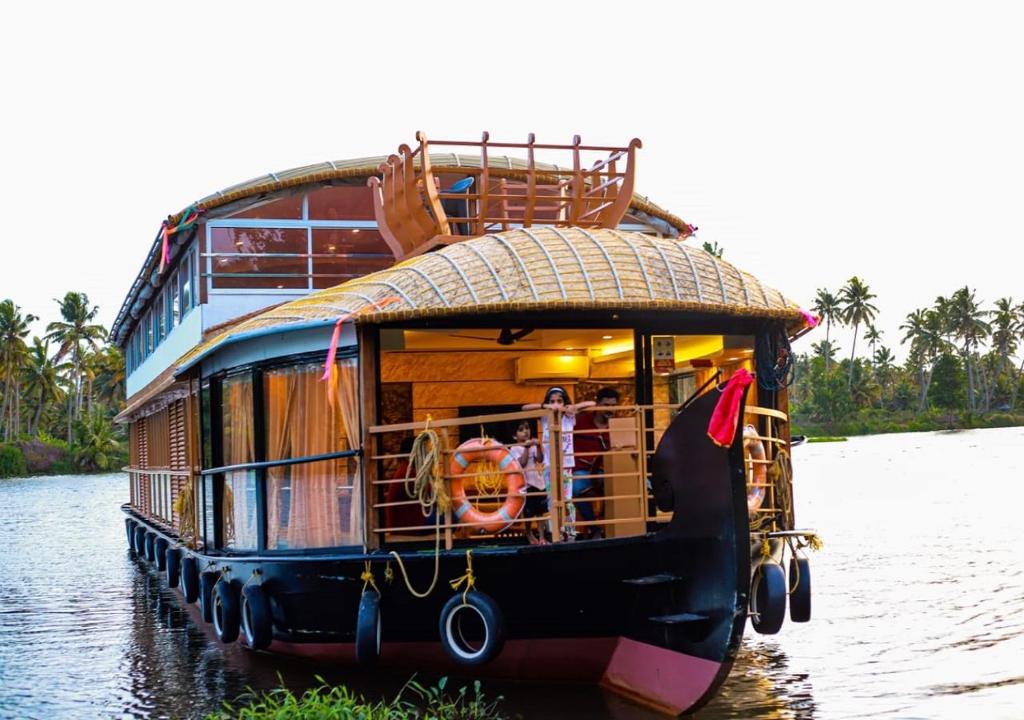
Access is only by boat. That six-minute ride from the mainland jetty is not just transport. It is a ceremony. It is the moment you leave the dusty, noisy world behind. The putter of our boat’s engine becomes the only sound as we glide past Chinese fishing nets, their skeletons black against the sky.
There are no cars here. No shops. Just a handful of family homes, coconut groves, and our place. The isolation is not loneliness. It is a profound quiet. Your world shrinks to the size of our island, about two acres. Your senses open up to the details you normally miss.
You notice the precise green of a new banana leaf. The intricate pattern a water bug makes as it skims the surface. At night, the darkness is absolute, broken only by a sky dense with stars and the occasional lantern of a night fisherman. The lake cradles you. There is no way to rush, nowhere to go. You simply are.
What Food Can You Expect Here?
You eat what the lake and our garden give us. Breakfast is often steaming idiyappam (string hoppers) with a spicy chickpea curry, or fluffy appam with coconut milk sweetened with jaggery. The taste of the morning.
Lunch is a proper home-cooked Kerala meal. Maybe a fiery fish curry with kodampuli (Malabar tamarind), where the karimeen (pearl spot fish) was swimming that morning. Or Karimeen Pollichathu—fish marinated in a paste of spices, wrapped in a banana leaf, and pan-roasted until the leaf blackens and the flavors melt together.
Dinner might be a simple, perfect meal of kanji (rice porridge) with leftovers and pickles, eaten as the breeze comes off the water. If you are lucky, you will be here for a Sadhya, the festival feast served on a banana leaf. Dozens of small dishes, from bitter gourd thoran to sweet payasam, a symphony of tastes that tells the story of this land.
The constant is the coconut. Freshly scraped for chutney, its milk for curries, its oil for frying mustard seeds until they crackle and pop, releasing their nutty scent into the entire house.
Jackson’s Practical Tips for Visitors
Come prepared to be present. Here is how to make the most of it.
- Pack light, soft bags. Suitcases are difficult in the boat. Bring clothes that dry quickly—the air is humid. Essential items: a good hat, sunscreen, mosquito repellent (we have nets, but it helps), and a pair of sandals you can slip on and off easily.
- Carry cash. The nearest ATM is a boat ride away. While we can handle most things, for small purchases from local vendors or boatmen, cash is king.
- Learn three Malayalam words: “Namaskaram” (hello/respectful greeting), “Nanni” (thank you), and “Sukhamano?” (are you well?). It opens smiles.
- Do not over-plan. One activity a day is enough—a morning canoe trip, an afternoon helping in the garden, an evening watching the sunset. Let the day unfold.
- Ask us to arrange a shikara boat for a silent sunset cruise. It is wider and more stable than a canoe. You can lie back on the cushions and watch the sky turn from orange to deep purple over the water.
What Is the Best Time to Visit Alappuzha for a Lake Stay?
Every season paints the lake a different color. It depends on what you want to feel.
Monsoon (June to September): The lake is fullest, lush, and wildly green. The rain is a constant, gentle drum on the coconut fronds. The air is cool and smells of petrichor—wet soil. This is for the romantic, the writer, the one who finds peace in the sound of rain on water. Bring a raincoat and a love for steaming cups of chai.
Winter (October to February): This is the famous season. The sky is a clear, brilliant blue. The sun is warm but not harsh. The water is calm, perfect for long canoe explorations. The nights are cool enough for a light shawl. This is the most popular time, with vibrant birdlife and perfect weather for photography.
Summer (March to May): The air is still and hot, but the lake breeze is a salvation. The light is intense, sharp, making the colors of the fishing boats and women’s saris pop. Mangoes ripen on the trees. It is a slower, sleepier time. Ideal for those who want deep quiet and to experience the languid, slow heartbeat of the place before the rains come.
Frequently Asked Questions About Staying Near Vembanad Lake
How far is Evaan’s Casa from the Alappuzha town?
By road and boat, about 30 minutes total from the main town bus stand. We meet you at a designated jetty in Punnamada. From there, it is a six-minute private boat ride to our island. You are away from the town’s hustle, but close enough if you need supplies or want to visit.
Is it safe to stay on an island, especially with children?
Yes, absolutely. Our island is a close-knit community. The waters by our home are calm and shallow near the edges. We have life jackets for all ages for boat rides. The biggest danger is a child falling in love with our resident ducks and not wanting to leave.
What should we absolutely pack?
Beyond the basics, pack a sense of curiosity. Binoculars for bird watching are a great idea. A journal. A power bank for your phone (though we have electricity, unplugging is encouraged). And leave your formal shoes behind—barefoot or sandals is the code here.
What is the approximate cost for a family?
We are a homestay, not a resort. Our pricing is for the entire experience—meals, boat transfers, and your stay. It is simpler. For a family of four, think of it as similar to a good hotel in town, but with all home-cooked meals and the priceless inclusion of the lake itself as your living room. Contact us directly for the clearest picture.
So, that is what it means to stay near Vembanad lake, through my eyes. It is more than a place to sleep. It is a chance to live, for a few days, at the pace of the water. To let the lake’s slow, ancient rhythm reset your own. It is the memory of that first silent morning, the mist hanging over the water like a secret, and knowing you are exactly where you need to be.
If this calls to you, my family and I would be honored to share our home. You can find more of our story and see our island at Evaan’s Casa. Just listen for the sound of the water against the stone. We will be here.